Hello friends,
I’m continuing my deep dive series into the knitting design I did for Spycraft, the show I wrote and produced with Claire, and which toured last Fall around Ontario.
Today I’ll be delving into the most complicated of the Spycraft designs: Audette’s Diamonds sweater, designed for the show’s heroine, Audette Whitlock, a fictitious character who is the kick-ass lead of our show.
Audette is a woman in her fifties who shows remarkable aptitude for information gathering and processing and is tapped by the Special Operations Executive (aka ‘Interservice Research Bureau’, ‘Churchill’s Secret Army’, ‘Baker Street Irregulars,’ and ‘Ministry of Ungentlemanly Warfare’) to be inserted into Occupied France as a radio operator (or ‘pianist’) to spy on the German Wehrmacht. She is also a hidden Jew, which adds additional jeopardy to the position – a job with a life expectancy in 1943 of about six weeks. Not only does Audette exceed expectations, she orchestrates a way capture coded intelligence in her knitting and delivers classified information back to her handlers in London when other agents are obliged to observe radio silence.
Because knitting and coding were essential to the narrative, we wanted all the characters (except the Nazis) to have some sort of knitted and coded garment in their wardrobe. In previous newsletters (and check them out if you’re so inclined—they’re on my website here) I’ve gone over the history and development of Gerald’s Lions waistcoat, Simons SOE vest, and June’s Secretary Sweater.
Audette’s sweater was the first one I began designing, and it was the one that took the longest. This was due to three things – the code, the message, and the knitting.
First, the code. In thinking about knitting with code, the first thing to occur to me was—of course—Morse code. Morse code operates on a binary system of dots and dashes, and knitting operates on a binary system of knit and purl stitches. There’s some obvious synergy there. One binary system should translate pretty easily to another, right? Well… sort of.
If I were to start with a background of knitting, purl stitches would appear as raised bumps, and it shouldn’t be too hard to turn those bumps into a sequence of dots and dashes. I quickly whipped off a few tests swatches and was very happy with how clever I was. But Claire took one look at them and said they looked like, um, crap (my words, not hers—she was kinder and gentler than that). She proceeded to lay down the law: the knitting for the show could not just have code in it—it had to be beautiful.
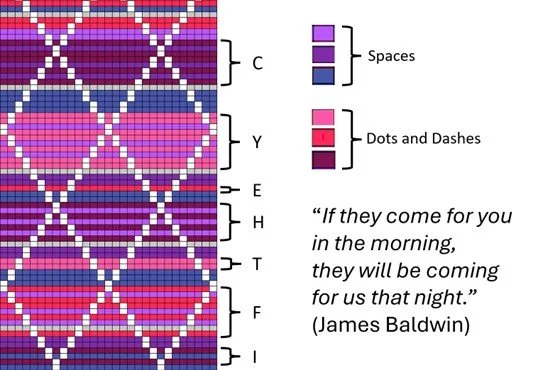
That made things tougher (but she was right, ultimately better). I decided to hide the dots and dashes of the Morse in coloured stripes. One row of a certain colour was be a dot, two rows were a dash. Then, a contrasting colour was used for the spacing. One row of contrasting colour was a space between the dots or dashes within a letter, two rows were the space between letters, and three rows were the space between words.
But using just two colours might make it too easy to see the code. To throw any would-be sleuths off the scent, I used three different hues of those two contrasting colours. This made the stripes look much more random.
As with the other sweaters, I used yarn from Briggs & Little of Harvey, New Brunswick, because they have such a wide array of colours… and, of course, because they’re lovely people. Fun fact: they were also in business during WWII—so, many of the yarns we used were 100% historically accurate.
Finally, to hide the fact that there was code involved, I distracted from the horizontal stripes by placing a completely different pattern in the foreground. Here’s what my very first knitted sketch looked like:
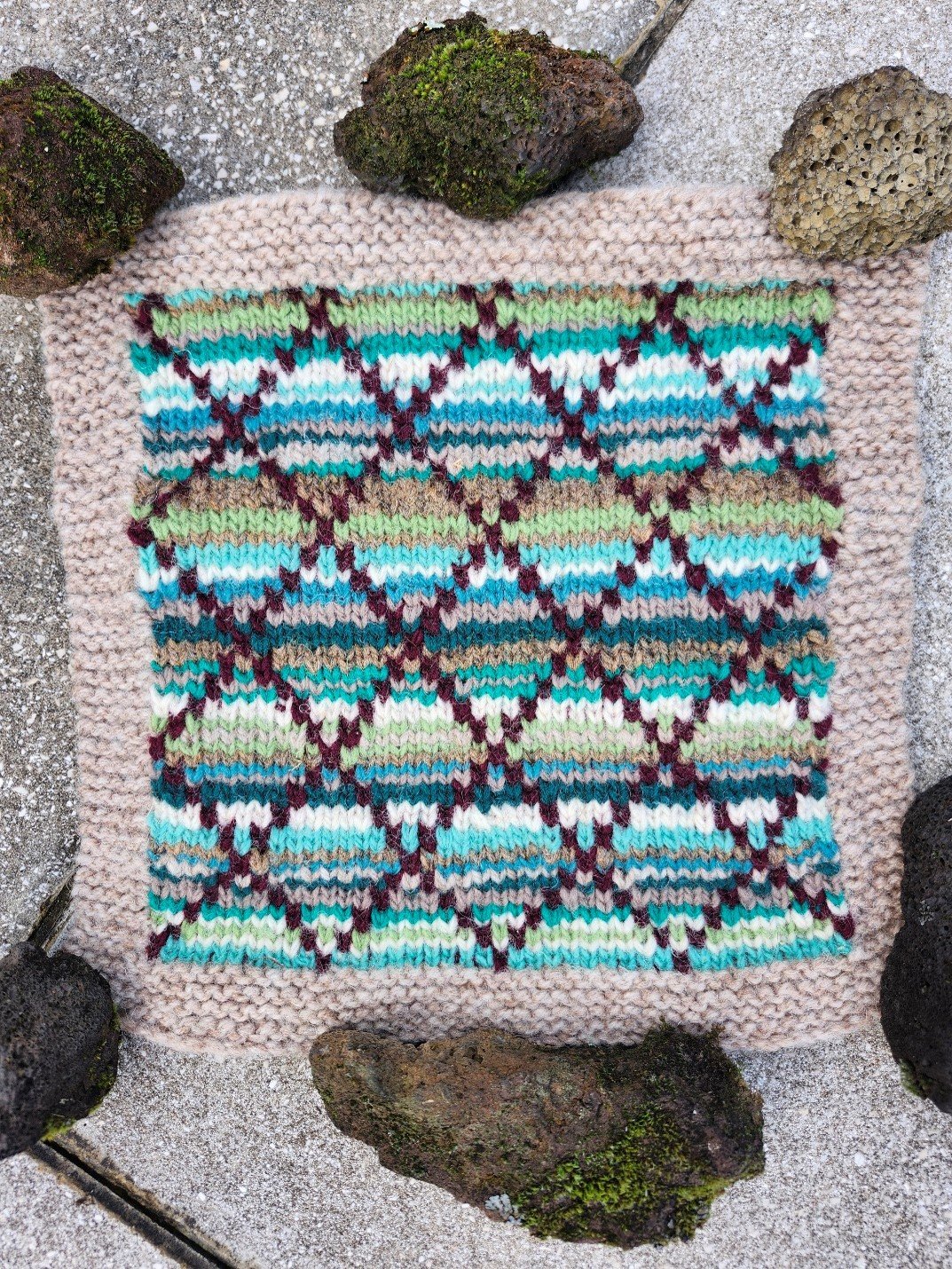
There is code in there, it’s just not as applicable as I would have liked. I started with the Latin phrase “dubito, ergo sum,” which I got from M.R.D. Foot, the official historian of the SOE. He translated “dubito, ergo sum” to mean “I doubt, therefore I survive” – which must be the motto of every successful secret agent. My swatch (reading up) was able to hold the DUBITO ERG.
The diamond pattern did a good job pulling focus from the stripes behind, but I wondered if there might be another pattern that might work as well. I tried a zig zag, below. (Pay no attention to the background: it is being held in place by the spines of a cactus in the Azores, where Claire was attending a writing retreat).
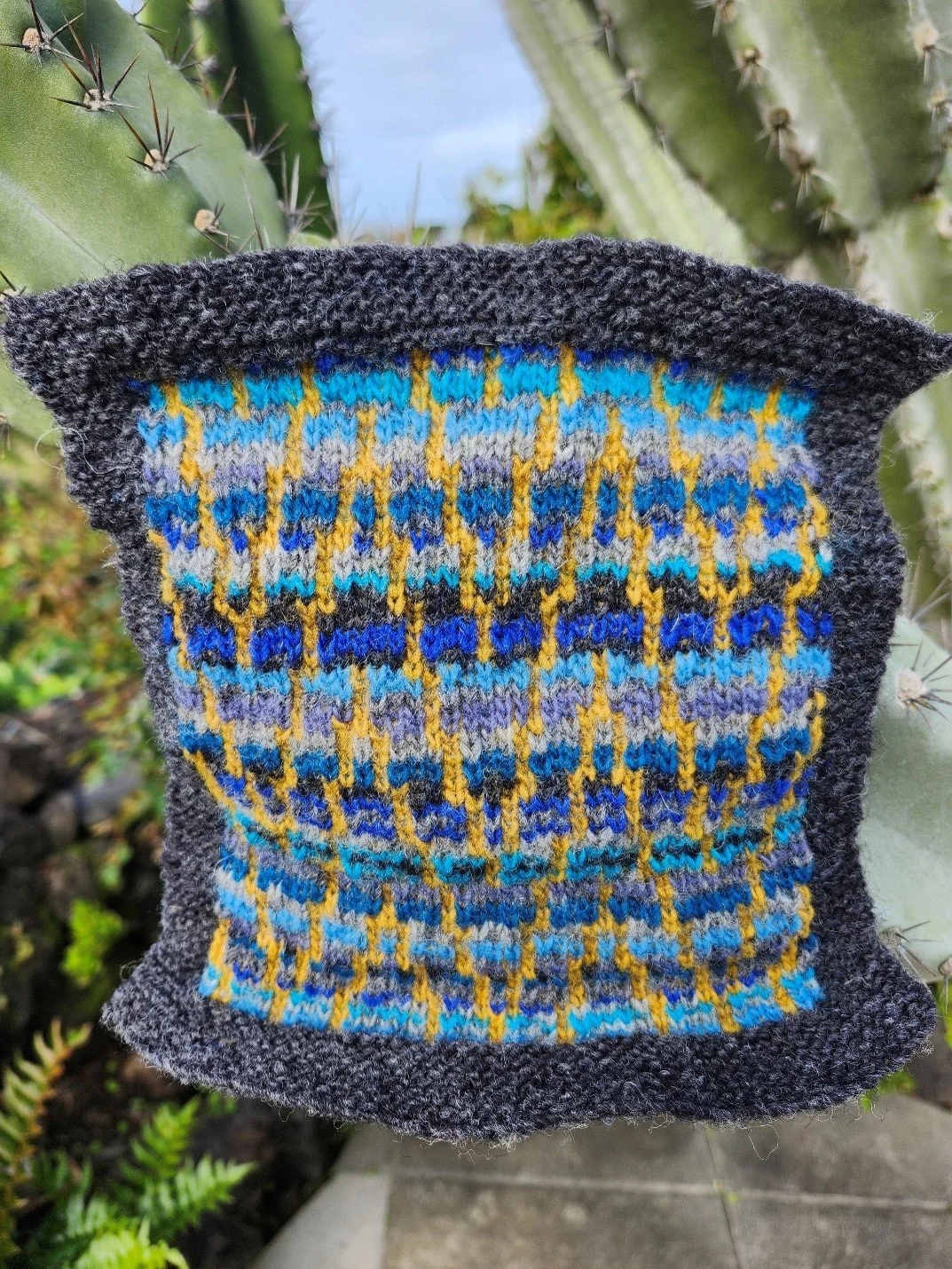
The zig zag was a bit messy though, so I decided to stick with the diamonds. Around this time, Claire and I were visiting her family in Paris. We decided to visit the Shoah memorial (The Holocaust museum) in the Marais district (By the way, this is a powerful museum: a must-see when in Paris). Claire pointed out that one of the buildings associated with the Memorial featured a lattice of stars of David.
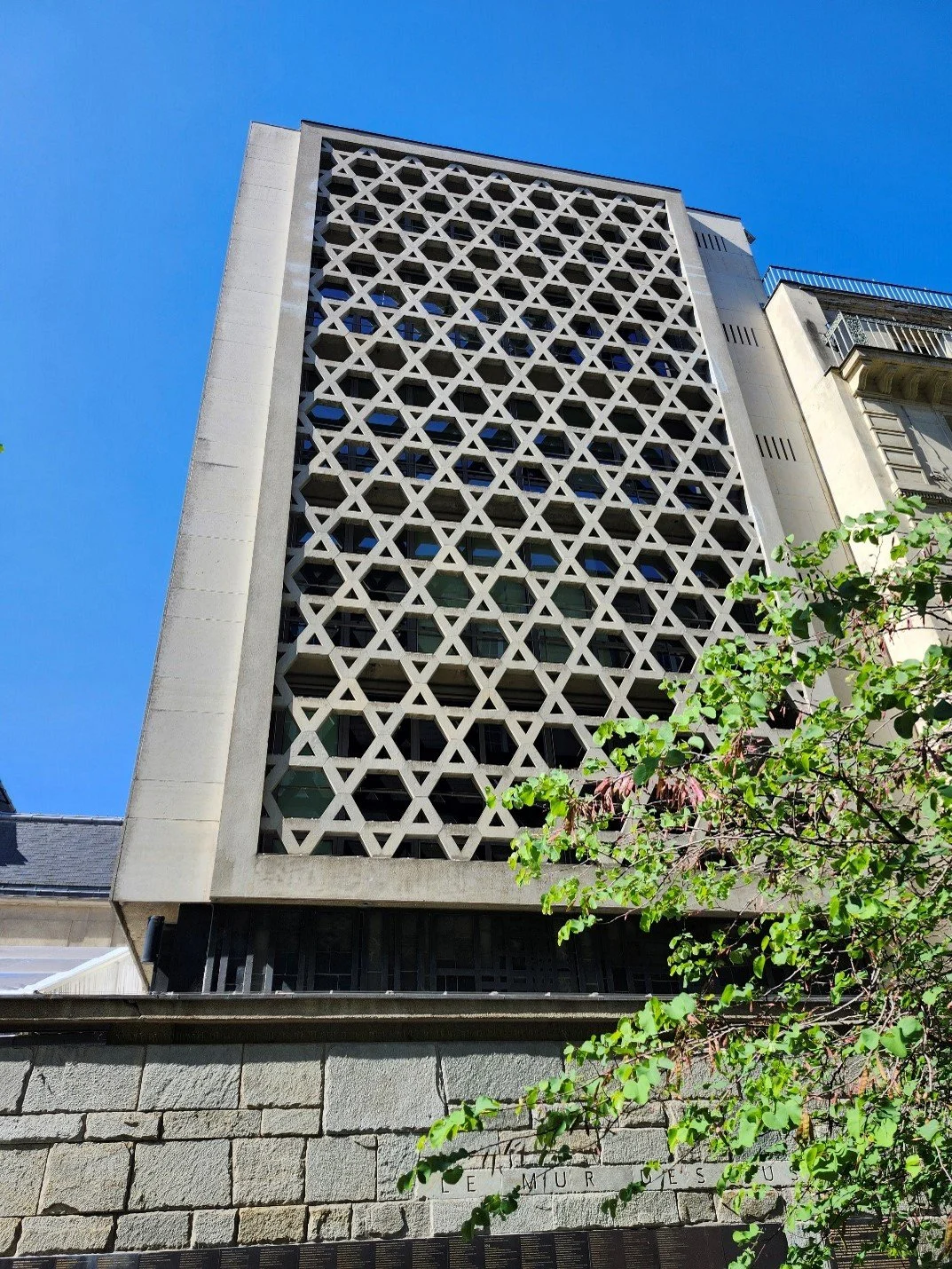
It didn’t take me long to see that the Stars of David were formed by a diamond pattern with horizontal bars cutting across the lattice about half-way between the intersections of the diamonds. And that is what I already had for Audette’s sweater: diamonds and horizontal stripes. I was pretty pumped by this possibility and had to try it out right away, as is evidenced by the photo below taken on the top of the carry-on I was traveling with. (Note the Monoprix shopping bag attached to the luggage handle full of Briggs & Little yarn.)
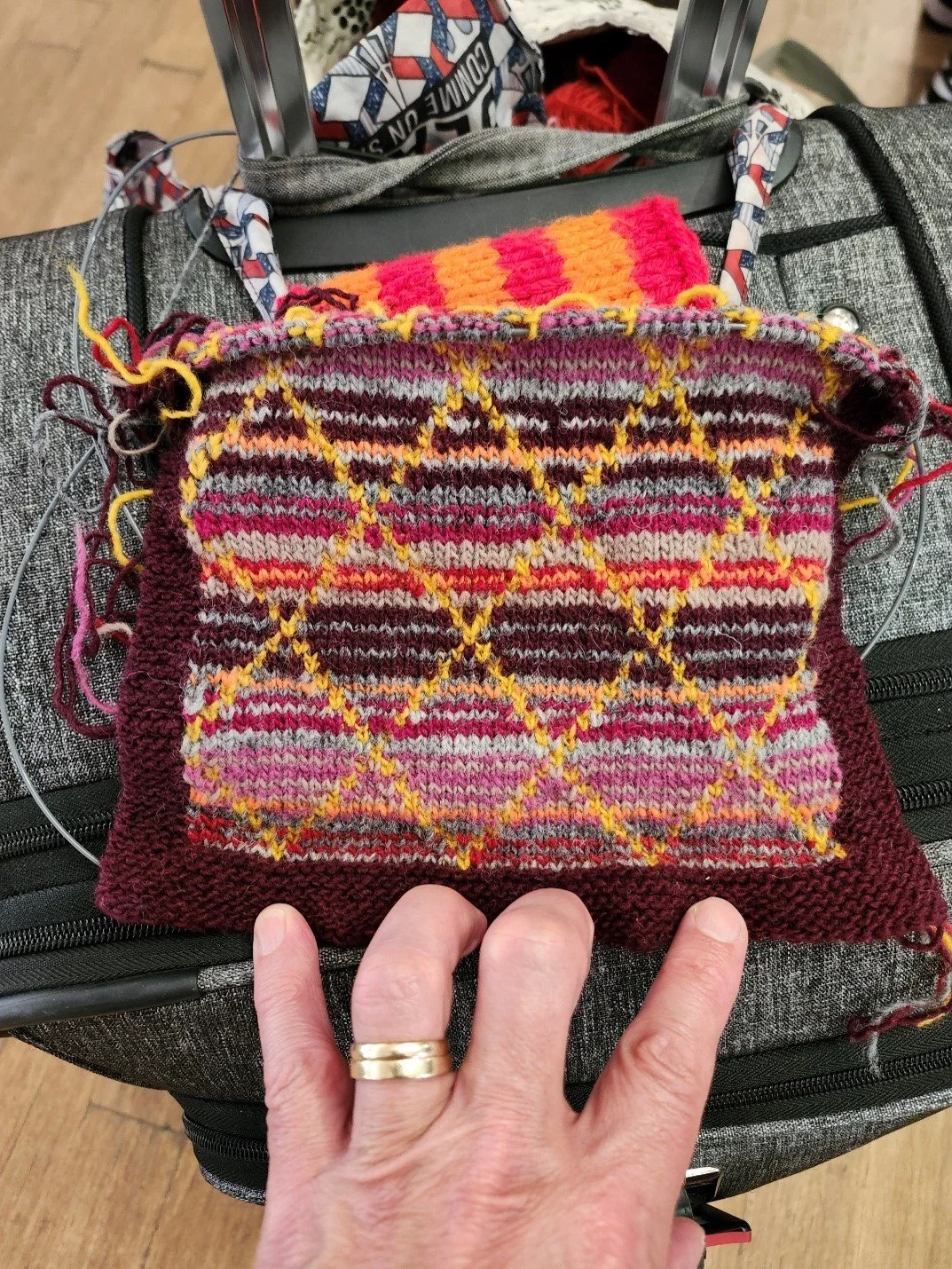
If you add the horizontal orange lines to the diagonal gold lines, you can see a lattice of Stars of David. Yes, you do have to look for them, but that’s not such a bad thing for those of us who are trying to hide images and messages in our work.
Speaking of the message we were trying to hide, Claire and I needed to come up with something that worked for our main character, a hidden Jew, who was working to undermine the Nazis and everything they stood for. We decided on a quote from James Baldwin: “If they come for you in the morning, they will be coming for us that night.”
One challenge with hiding Morse code in horizontal stripes was that it took up a lot of room. This is what the pattern for the first few words looked like (read it from bottom to top):
The code took up so much space, in fact, that I had to use the front, back and then sleeves of the sweater to get it all in. This means that the patterns for each of those sections – while looking very similar – were actually completely different. See below.
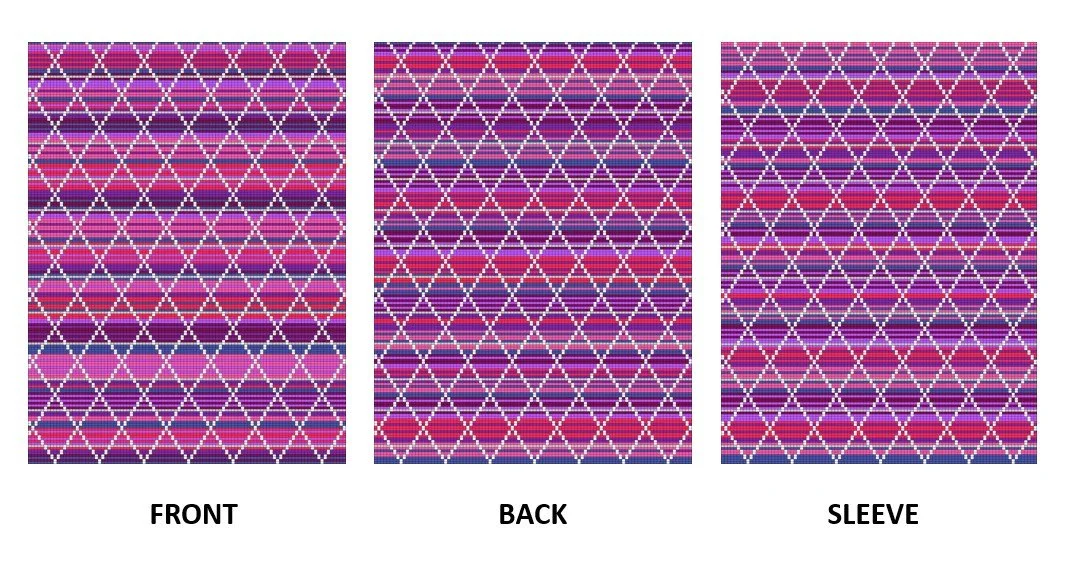
If you’d like to try to read the code, start at the bottom of the front panel, read up, then move right and do the same with the back and sleeve. Have at it!
Much appreciation and respect to three folk:
- Lynne Pascoe (our traditional knitwear consultant) of Sheep’s Clothing LINK who executed this entire pattern on her knitting machine. She is my hero.
- Phyllis Goodfellow, who came to many rehearsals and sat in the costume department sewing in ends.
- Briggs & Little for donating the yarn for this and all the sweaters in the show.
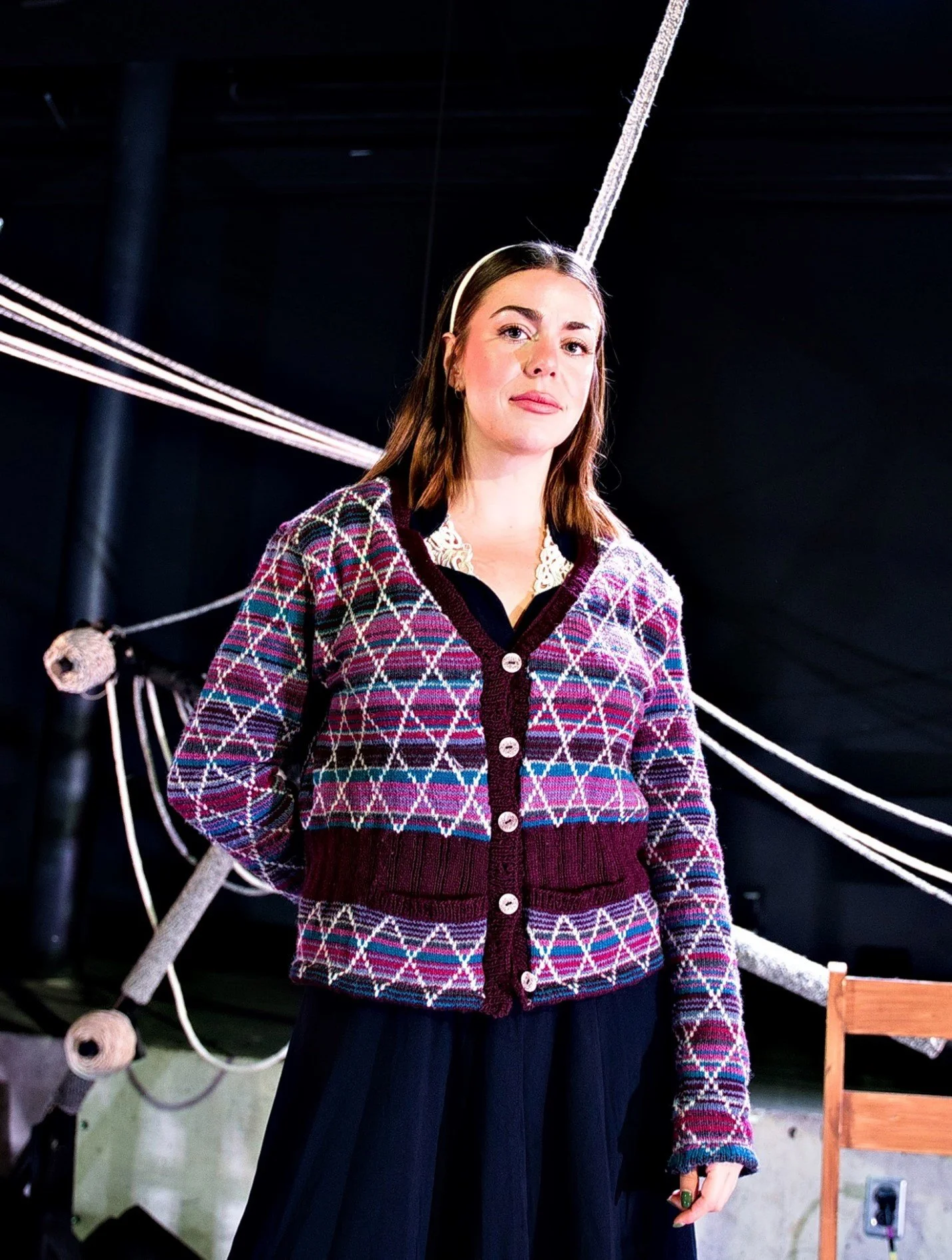
This is how the final garment looked on stage, as worn by the wonderful Diane Flacks who brought the character of Audette to life.
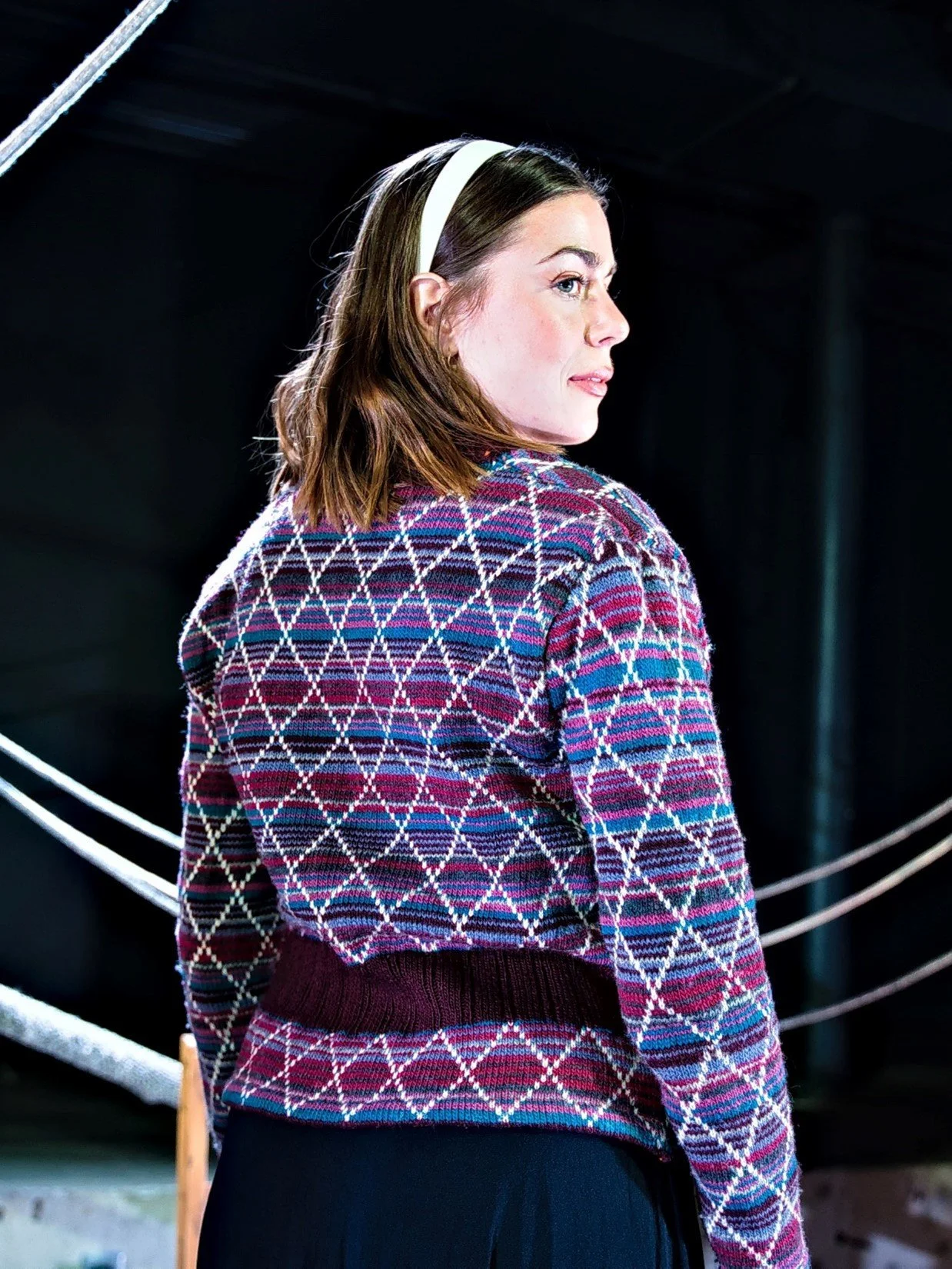
And here are another couple of shots showing more detail from a photo shoot, this time with the sweater modeled by Charlotte Dennis.
A Craftivism Shout-out
As a big fan of craftivism (the art of gentle protest, which often manages to wonderfully subversive), I am loving the work of Canadian artist Alexandria Masse brought to my attention by Manitoba-based poet Desiree Penner. Masse is crocheting the words of her birth control information into a huge tapestry that swallows a room.
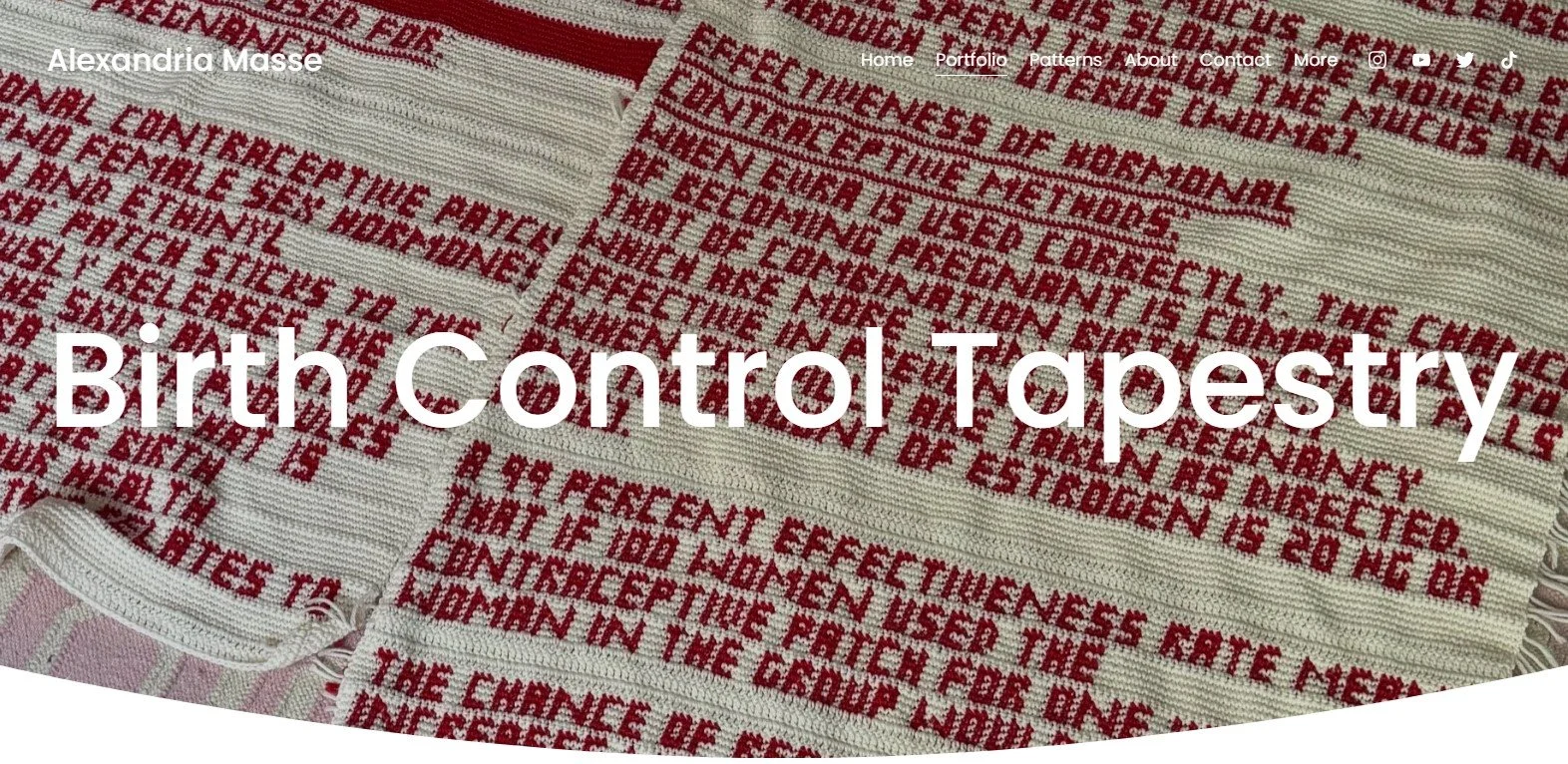
The result is a wonderful commentary on the importance of women’s rights, which society has been undercutting at our peril. In a medium that is paradoxically soft and welcoming, Masse crafts her message in blood red letters on a scale that is at first comforting and disarming, and then in-your-face and impossible to ignore. Bravo. Have a look, follow her on socials, and give her your support.
Coming Events
Meanwhile, there are a great many things going on with me and Claire this summer. The big thing is Claire’s book tour to celebrate the recent publishing of her second novel, Lost in France. Here’s a quick tour schedule – find an event near you, and we’d love to see you there.
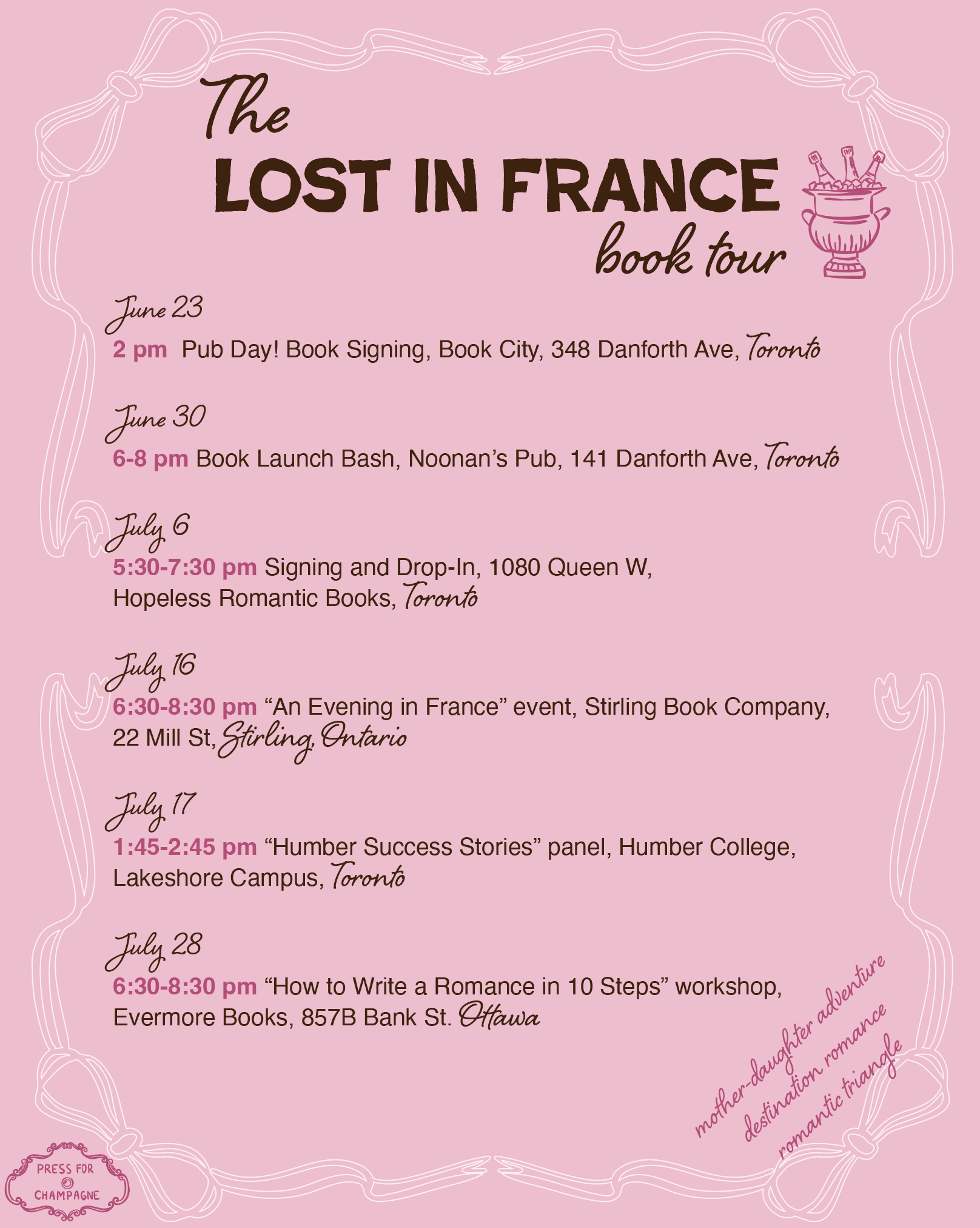
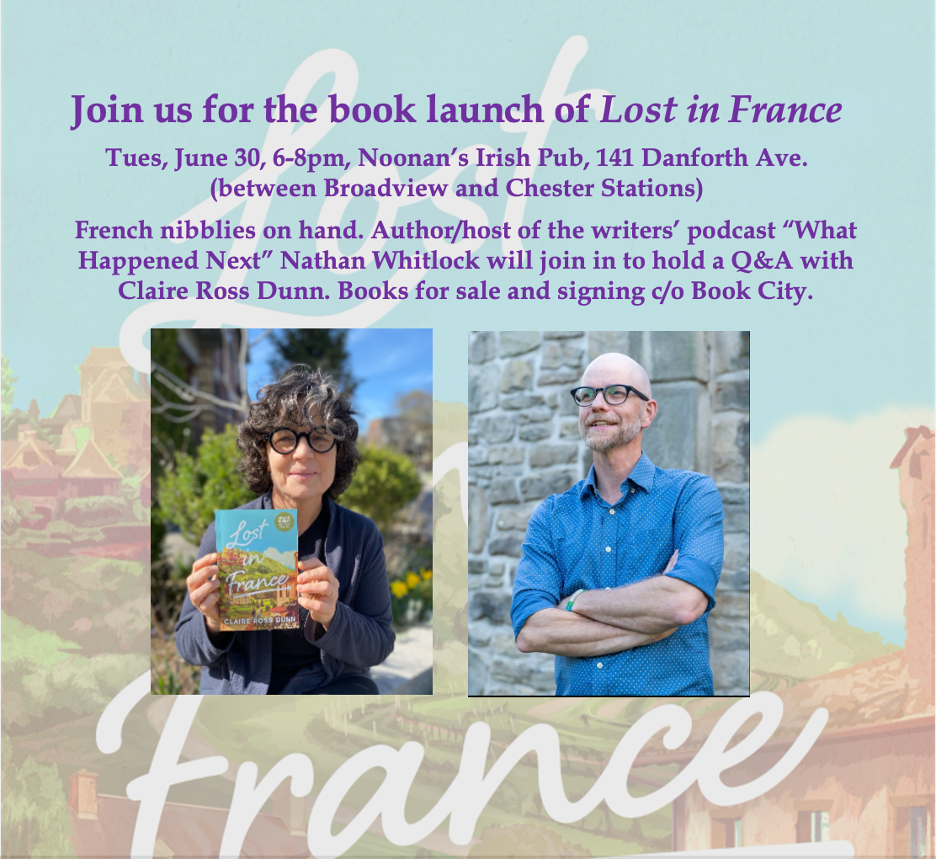
Tonight! Tues, June 30, 6-8pm: The Lost in France Book launch.
As this newsletter is going out on June 30, you have a last-minute chance to join us for the book launch of Lost in France! The book’s official publishing date was June 23, so if you have your copy, you can bring it to the launch party and have it signed by the author (also known as my wonderful partner in life and art).
Alternatively, if you haven’t got a copy yet, you can pick one up at the party. Either way, you are cordially invited to come and get Lost in France...by way of Ireland. Or at least at a great Irish pub, our local: Noonan's Irish Pub at 141 Danforth Avenue (between Broadview and Chester Stations, south side of Danforth).
Thanks for reading, friends. Looking forward to next time.
Kirk